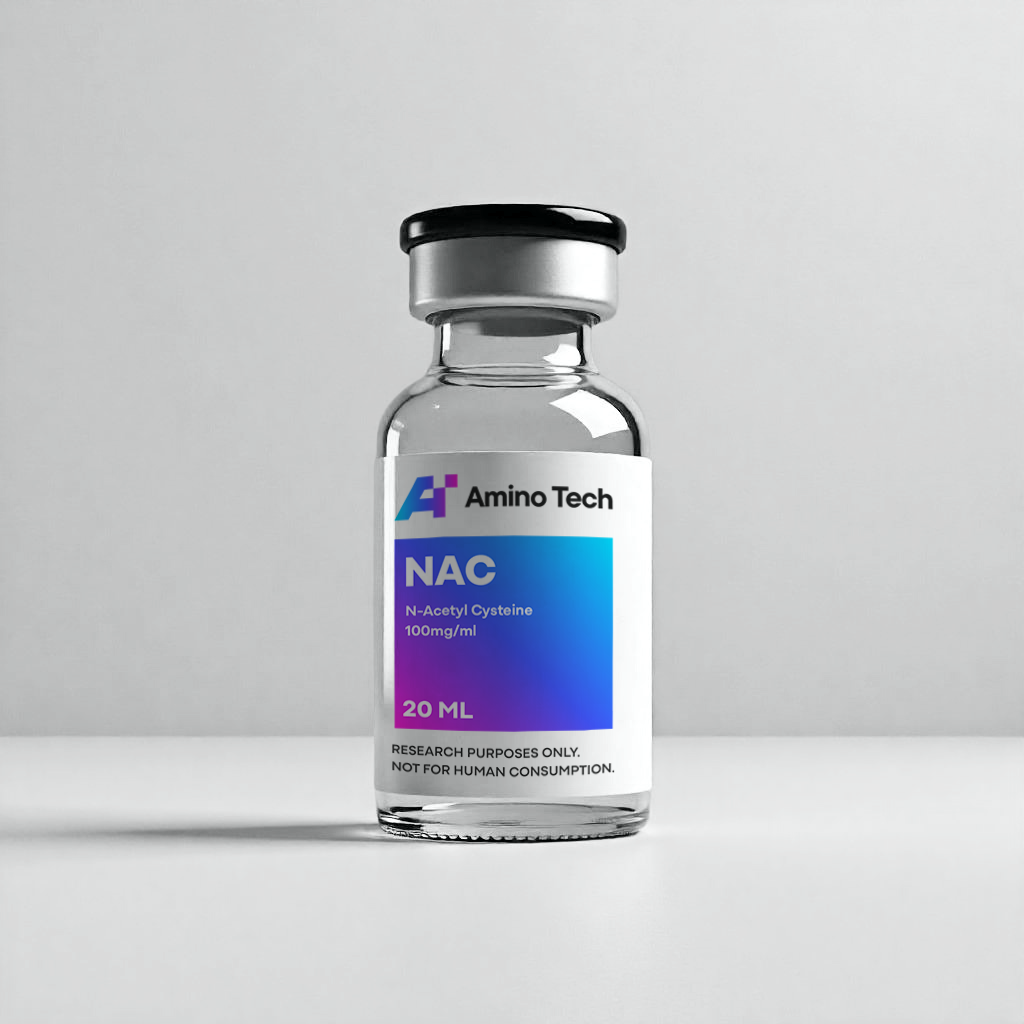

What is NAC (Injectable)?
N-Acetylcysteine (NAC) is a thiol-containing compound and one of the most clinically validated antioxidants available, widely recognized for its role as the rate-limiting precursor to glutathione, the body's primary intracellular antioxidant. It exerts protective effects through multiple pathways simultaneously: directly scavenging free radicals, replenishing glutathione stores, thinning respiratory mucus, and modulating inflammatory signaling. In the performance and biohacking space, injectable NAC is reserved for periods of elevated physiological stress such as active compound cycles, nootropic stacking, illness onset, or hard training blocks where the body's oxidative and detoxification burden is highest. At 100 mg per ml, the injectable format delivers NAC directly into circulation for complete bioavailability with demonstrated positive effects on liver and kidney markers during high-stress periods.
Mechanisms of Action
-
Glutathione precursor activity providing cysteine, the rate-limiting substrate for glutathione synthesis, directly replenishing the body's master antioxidant and supporting cellular detoxification capacity across virtually every tissue type
-
Direct free radical scavenging through its thiol group reacting with and neutralizing reactive oxygen species independently of glutathione, adding a second layer of antioxidant protection
-
Anti-inflammatory pathway modulation inhibiting NF-kB activation and reducing pro-inflammatory cytokine signaling, contributing to reduced systemic inflammation during high-stress periods
-
Mucolytic activity breaking disulfide bonds in mucus glycoproteins to reduce viscosity and improve respiratory clearance, the mechanism behind its traditional clinical use in respiratory conditions
-
Hepatoprotective activity supporting liver detoxification through glutathione-mediated conjugation of toxic metabolites, with the strongest evidence coming from its clinical use in acetaminophen overdose treatment
-
Neuroprotective and neuromodulatory effects through glutamate modulation and oxidative stress reduction in neural tissue, contributing to its studied applications in mental health and cognitive protection
Benefits
-
Liver and kidney protection during cycles with measurable improvements in liver and kidney blood markers reported during high-stress periods when dosed consistently in the morning
-
Glutathione replenishment and antioxidant defense the foundational benefit, supporting the body's ability to handle oxidative load from training, compounds, nootropics, or environmental stressors
-
Immune support and illness defense with aggressive dosing at first sign of illness helping to shorten duration and severity through antiviral activity and immune pathway support
-
Respiratory health support beneficial for anyone dealing with respiratory conditions, mucus buildup, or compromised lung function through its mucolytic and anti-inflammatory properties
-
Mental health and neuroprotection with research supporting potential benefits in depression, OCD, and bipolar disorder through glutamate modulation and oxidative stress reduction in neural tissue
-
Heavy metal detoxification as a glutathione precursor supporting the chelation and clearance of toxic heavy metals from the body over time
-
Cardiovascular health via improved endothelial function, reduced inflammation, and vascular protection through antioxidant activity in blood vessel walls
Dosing
|
Context |
Dose |
Frequency |
|---|---|---|
|
Low stress / maintenance |
0.25 ml (25 mg) |
Every few days |
|
High stress / on cycle |
0.5 ml (50 mg) |
Daily in the morning |
|
Illness protocol (day 1) |
2 ml (200 mg) |
Twice on the first day of symptoms |
|
Illness protocol (ongoing) |
2 ml (200 mg) |
Daily until symptoms clear, then return to 0.5 ml |
Reserve higher doses for periods of genuine physiological stress. During normal baseline periods, a small dose every few days maintains protective coverage without overloading endogenous glutathione production. Morning dosing is preferred for the cycle support and recovery context. The illness protocol front-loads the dose aggressively to mount an immediate antioxidant and antiviral response.
Note: Use caution if taking nitroglycerin medications as NAC can potentiate their effects. Individuals with diabetes should monitor blood sugar more closely as NAC may influence insulin sensitivity. Allergic reactions are rare but possible; monitor for rash, itching, or swelling after the first injection.
Safety Profile
-
Gastrointestinal distress more relevant to oral use and largely avoided with injectable delivery, but possible at very high doses in some users
-
Allergic reactions rare but possible, presenting as rash, itching, or swelling; monitor after the first injection
-
Insulin sensitivity effects with NAC potentially influencing glucose regulation, warranting closer blood sugar monitoring in diabetic users
-
Nitroglycerin interaction a meaningful drug interaction where NAC potentiates the vasodilatory effects of nitroglycerin; avoid combining without medical guidance
Citations
-
Myllyharju, J., et al. NAC and glutathione precursor activity in redox biology. PubMed. https://pubmed.ncbi.nlm.nih.gov/12424171/
-
Atkuri, K. R., et al. N-Acetylcysteine as a precursor to glutathione and antioxidant defense. PubMed. https://pubmed.ncbi.nlm.nih.gov/10821280/
Disclaimer: The information provided is intended solely for educational purposes and should not be considered a replacement for professional medical advice. All compounds referenced are not for human consumption.