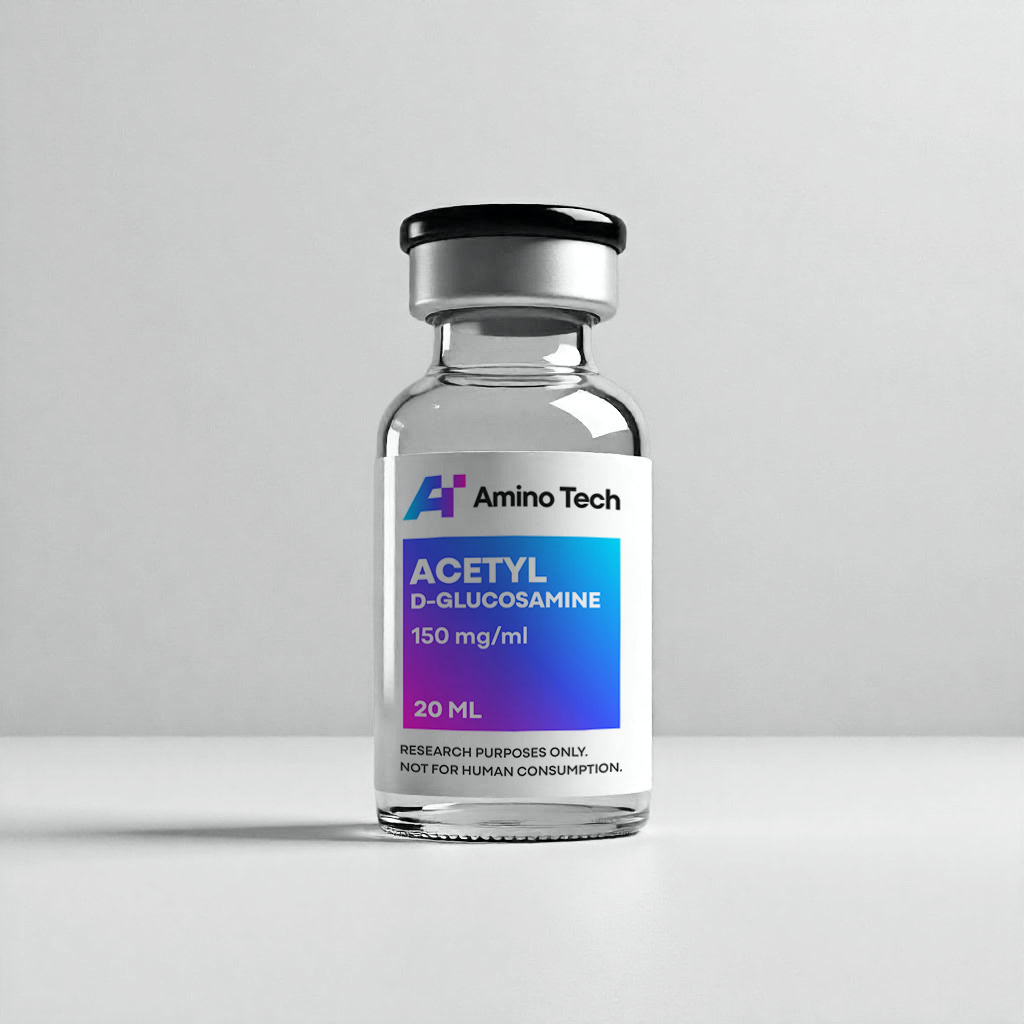

What is Acetyl D-Glucosamine?
Acetyl D-Glucosamine (N-acetyl-D-glucosamine, GlcNAc) is an amino monosaccharide and glucose derivative that serves as a foundational building block for glycosaminoglycans, the structural molecules that form the backbone of cartilage, synovial fluid, tendons, and other connective tissues. Unlike standard glucosamine supplements, the acetylated form is more bioavailable and also participates in O-GlcNAcylation, a post-translational protein modification involved in cellular signaling and regulation. In a performance and joint health context, injectable Acetyl D-Glucosamine is used both as a background maintenance compound for daily joint support and as a higher-dose therapeutic tool during active injury recovery protocols. Supplied at 150 mg per ml, it offers precise dosing control that oral glucosamine cannot match. It is derived from shellfish, which is worth noting for anyone with shellfish allergies.
Mechanisms of Action
-
Glycosaminoglycan precursor activity providing the substrate for the biosynthesis of hyaluronic acid, chondroitin sulfate, and other glycosaminoglycans that form the structural matrix of cartilage, synovial fluid, and connective tissue
-
Cartilage matrix support by supplying the molecular building blocks needed for chondrocytes to synthesize and repair extracellular matrix components, directly addressing the structural degradation that accumulates from heavy training loads
-
O-GlcNAcylation participation as a substrate for this reversible post-translational modification on proteins, influencing cellular signaling, gene expression, and protein stability in ways that extend beyond structural joint support
-
Synovial fluid viscosity support by contributing to hyaluronic acid synthesis, which determines the lubricating quality of synovial fluid and directly affects joint mobility and friction under load
-
Anti-inflammatory modulation with glucosamine derivatives shown to reduce certain pro-inflammatory cytokine activity in joint tissue, contributing to reduced pain and swelling in compromised joints
Benefits
-
Joint health maintenance and protection by continuously supplying the structural precursors needed to maintain cartilage integrity and synovial fluid quality under the repeated mechanical stress of heavy training
-
Injury recovery support with higher-dose protocols accelerating the repair of damaged cartilage, tendons, and connective tissue in targeted joints during active recovery phases
-
Improved joint flexibility and mobility through improved synovial fluid composition and cartilage hydration, reducing stiffness and improving range of motion over time
-
Reduced injury risk by maintaining the structural resilience of connective tissue that allows joints to handle the forces generated during intense resistance training without breaking down
-
Targeted local application with the injectable format allowing administration near specific problem joints for a more concentrated local effect than systemic oral supplementation can provide
Dosing
|
Context |
Dose |
Frequency |
|---|---|---|
|
Maintenance and injury prevention |
50–100 mg/day |
Daily |
|
Active injury repair protocol |
150–225 mg/day |
Daily for several weeks |
For daily maintenance, 50 to 100 mg keeps connective tissue precursor levels elevated and provides background joint protection during ongoing training. For active injury recovery, a higher dose of 150 to 225 mg daily over a few weeks provides the substrate load needed to support more aggressive repair. Pinning close to a specific problem joint is a practical approach for targeting local tissue and is preferred when there is a known area of concern. Pairs well with BPC-157, TB-500, and Joint Support blend as part of a comprehensive connective tissue protocol.
Note: Acetyl D-Glucosamine is derived from shellfish. Anyone with a shellfish allergy should exercise caution and consult a healthcare professional before use. Post-injection pain and mild GI stress are possible side effects though the compound is generally very well tolerated.
Safety Profile
-
Shellfish allergy risk as the compound is derived from shellfish, warranting caution in anyone with known shellfish sensitivities or allergies
-
Post-injection pain possible at the injection site, particularly when pinning near joints or smaller muscle groups; manageable with proper technique
-
Mild gastrointestinal discomfort reported infrequently, more common at higher doses and largely avoidable with the injectable format compared to oral glucosamine
-
Excellent overall tolerability with glucosamine derivatives having one of the most favorable safety profiles among joint support compounds across decades of clinical and research use
Citations
-
Hart, G. W., et al. Cross talk between O-GlcNAcylation and phosphorylation. Annual Review of Biochemistry.
-
Varki, A., et al. Essentials of Glycobiology. Cold Spring Harbor Laboratory Press. NCBI Bookshelf.
Disclaimer: The information provided is intended solely for educational purposes and should not be considered a replacement for professional medical advice. All compounds referenced are not for human consumption.