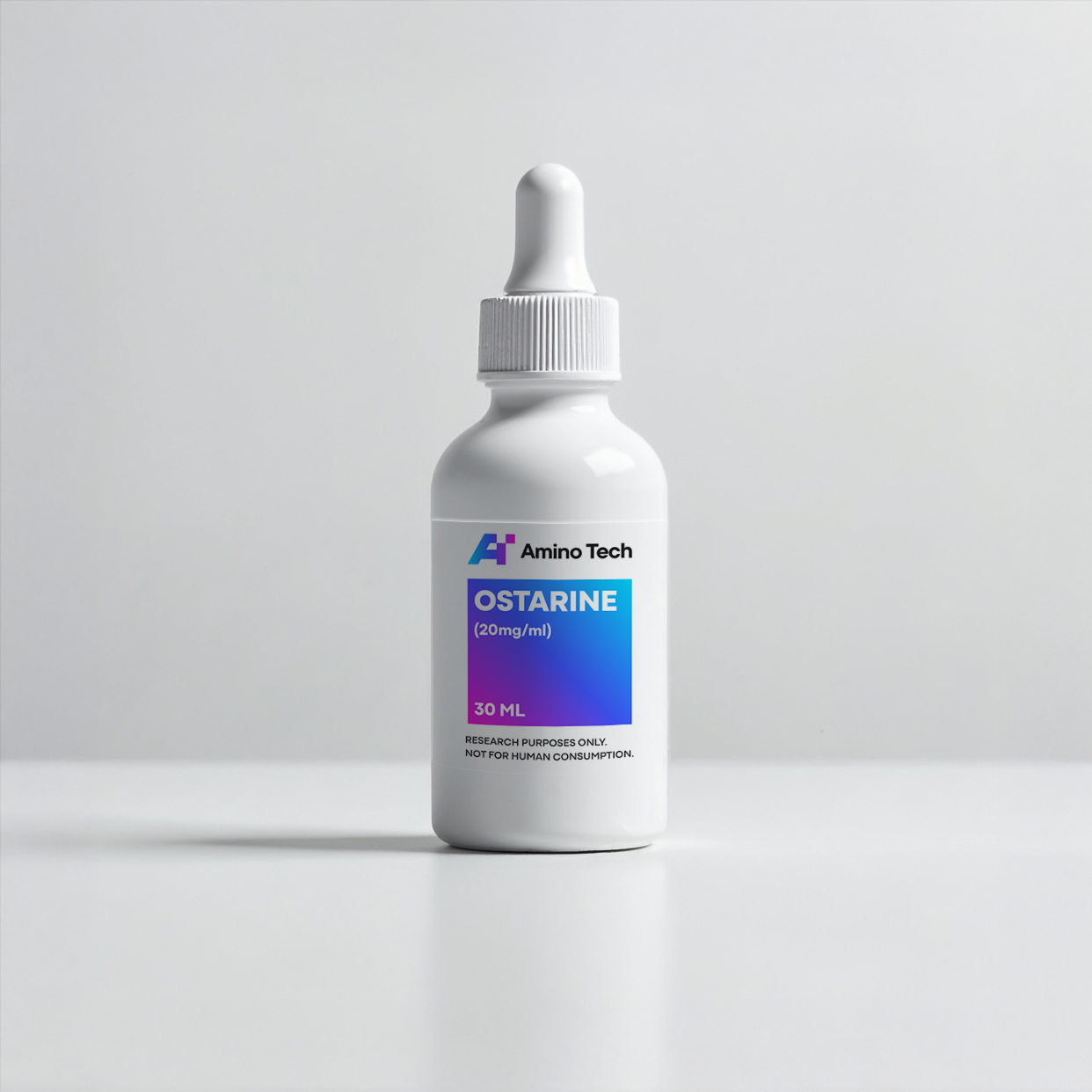

What is Ostarine?
Ostarine, also known as MK-2866, is a selective androgen receptor modulator (SARM) originally developed to treat muscle wasting conditions and support bone health without the androgenic side effects associated with traditional anabolic steroids. It selectively binds androgen receptors in muscle and bone tissue, promoting anabolic activity in those tissues while largely sparing androgenic effects elsewhere. Among SARMs, Ostarine is widely regarded as one of the mildest and most well-tolerated options available, making it a practical entry point for first-time SARM users and an effective tool for women at low doses. It is also one of the few compounds in this category consistently associated with mood improvement and joint health support rather than the aggression or joint dryness seen with more androgenic compounds.
Mechanisms of Action
Selective androgen receptor binding in muscle and bone tissue, activating anabolic gene expression and protein synthesis pathways while minimizing androgenic signaling in tissues like the prostate and skin
Muscle protein synthesis upregulation through AR-mediated transcriptional activity, supporting lean muscle maintenance and growth particularly effective during caloric deficits or recomposition phases
Bone remodeling support via androgen receptor activity in skeletal tissue, contributing to improved bone mineral density and structural integrity consistent with its original medical research context
Mild HPG axis suppression producing a less pronounced testosterone suppression compared to more potent SARMs, though still sufficient to warrant PCT after a full cycle without a test base
Joint tissue support with Ostarine's effects on connective tissue and synovial fluid commonly cited as contributing to the joint pain relief users experience during a cycle
Benefits
Lean muscle growth and preservation particularly effective during cutting phases or recomposition where maintaining muscle while managing body fat is the primary goal
Improved joint health and pain reduction one of Ostarine's most consistently reported benefits, with users noticing meaningful reductions in joint discomfort and improved mobility during a cycle
Bone density support relevant for long-term skeletal health and injury prevention, particularly in users with high training volumes or those in caloric deficit for extended periods
Mood boost and sense of well-being a notable differentiator from more androgenic SARMs, with Ostarine consistently associated with an uplifted and positive mood rather than aggression or irritability
Improved physique hardness and vascularity adding a degree of visual improvement to body composition that makes it useful as a finishing compound or during a cut
Female-friendly dosing profile with 5 mg representing an effective and well-tolerated dose for women, making it one of the most commonly recommended SARMs for female users
Dosing
Level | Daily Dose |
|---|---|
Female | 5 mg/day |
Male beginner | 10 mg/day |
Male intermediate / advanced | 15–20 mg/day |
Start at the lower end of the range and assess response before increasing. If titrating up, week 4 is a good point to consider a dose increase if progress has stalled and tolerance is confirmed. Cycle length of 8 to 10 weeks is appropriate with bloodwork monitoring throughout. PCT is recommended for males after a full cycle if not running a test base.
Note: Despite its mild reputation, Ostarine does suppress testosterone and can stress liver and kidney values at higher doses. Do not skip bloodwork and do not treat it as consequence-free simply because it is considered a beginner compound. A PCT plan should be in place before starting.
Safety Profile
Testosterone suppression milder than most SARMs but still present and requiring a structured PCT after each cycle to restore endogenous production
Mild androgenic effects including possible acne or libido changes in some users, though significantly less pronounced than with traditional steroids or more potent SARMs
Cardiovascular and lipid changes including potential shifts in cholesterol profiles warranting monitoring, particularly on longer cycles or at higher doses
Liver and kidney stress reported at higher doses, making blood work monitoring throughout the cycle an important safeguard rather than an optional step
Citations
Basaria, S., et al. The safety, pharmacokinetics, and effects of LGD-4033 in healthy young men. PubMed. https://pubmed.ncbi.nlm.nih.gov/23251794/
Disclaimer: The information provided is intended solely for educational purposes and should not be considered a replacement for professional medical advice. All compounds referenced are not for human consumption.