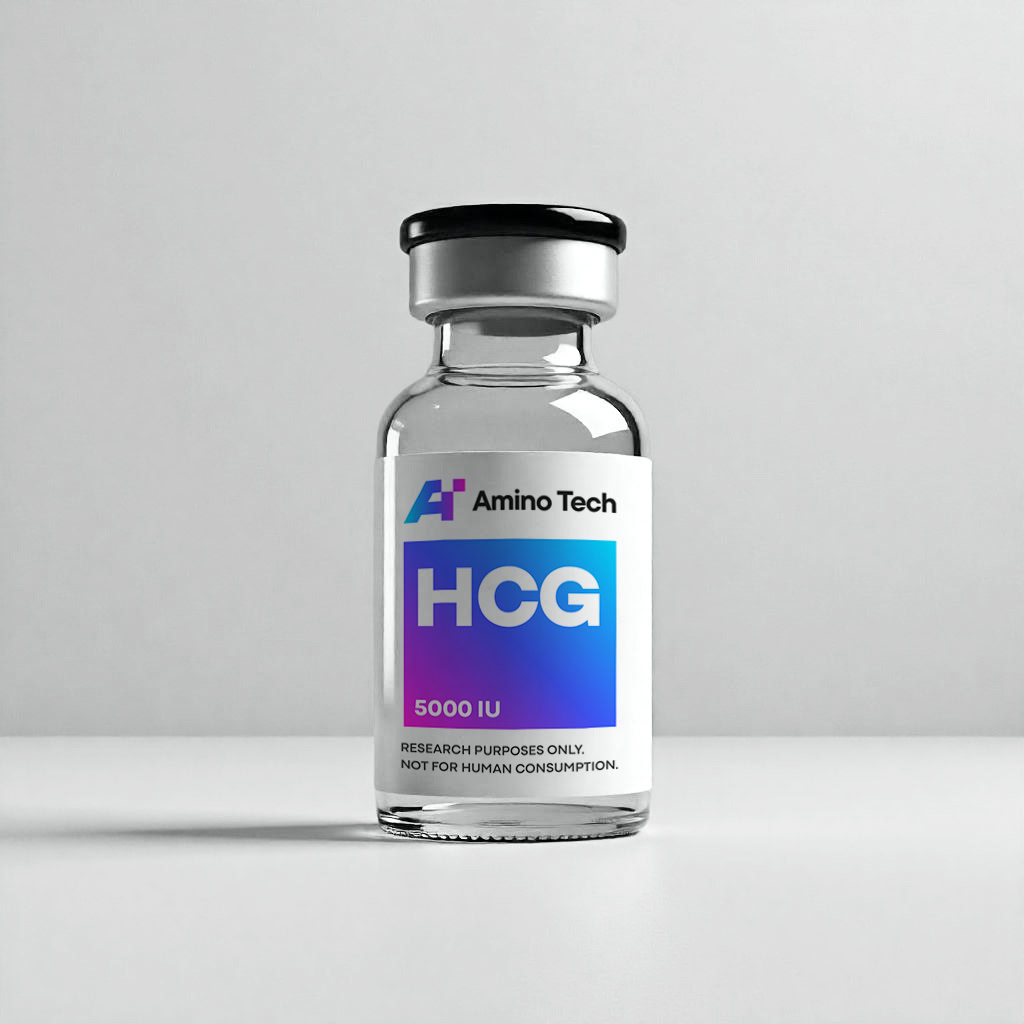

What Is HCG?
HCG (Human Chorionic Gonadotropin) is a hormone best known for its role in pregnancy, but it is also widely used in medical hormone regulation and fertility protocols. In male focused contexts, it is primarily discussed as an LH mimic that binds to LH receptors in the testes to support intratesticular testosterone production and testicular function when natural LH is suppressed. In female fertility settings, it is used to trigger ovulation by promoting final follicle maturation.
Mechanisms of Action
Mimics luteinizing hormone (LH) signaling by binding to LH receptors
Stimulates Leydig cell activity in the testes, increasing testosterone production signals
Supports spermatogenesis related endpoints by maintaining intratesticular androgen signaling
Helps preserve testicular function and size when exogenous testosterone or anabolic agents suppress endogenous LH
In females, promotes ovulation triggering by supporting final maturation of ovarian follicles
Benefits
Fertility support signals in both male and female reproductive models
Support for reversing testicular atrophy related to LH suppression contexts
Neurosteroid and wellbeing support themes that are often described as improved cognitive and brain function
Sexual function support signals, including sensitivity and ejaculate volume related claims in user discussions
Body composition support themes, often discussed as improved fat loss signaling via thyroid and metabolic pathways
Dosing
Goal | Dose |
|---|---|
Maintenance | 500 IU, 2 to 3 times per week |
Fertility | 1,000 to 2,000 IU, 3 to 4 times per week (sometimes higher depending on response) |
Stacking
Hormonal Support Stack
HCG
Testosterone Cypionate/Enthanate
HMG
Fertility Stack
HCG
Testosterone Cypionate/Enthanate
HMG
Kisspeptin
PCT Stack
HCG
Enclomophine
HMG
Disclaimer: The information provided is intended solely for educational purposes and should not be considered a replacement for professional medical advice. All compounds referenced are not for human consumption.