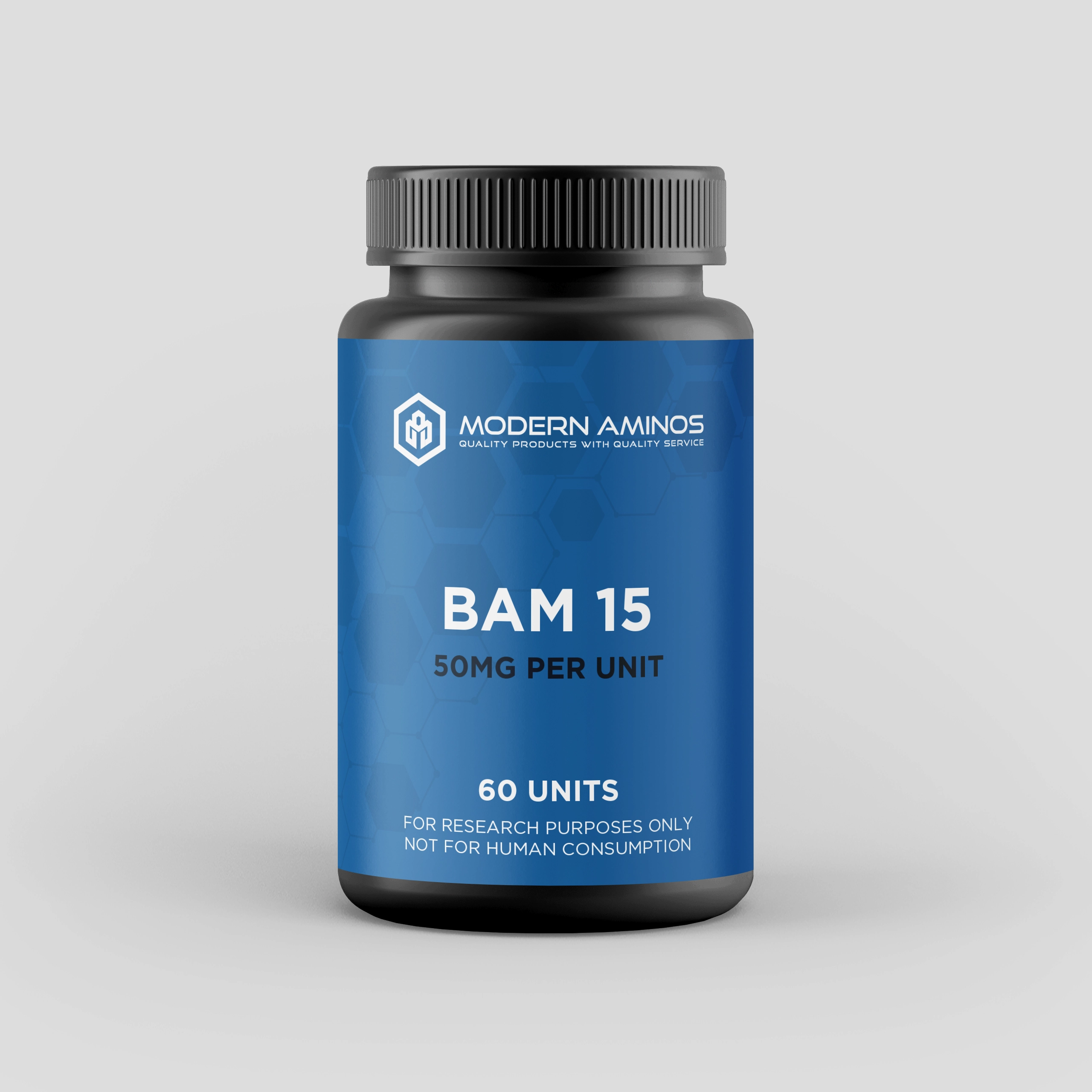

What Is BAM-15?
BAM-15 is a small molecule mitochondrial uncoupler used in research to study energy balance, cellular bioenergetics, and metabolic signaling. It is primarily investigated for its ability to dissipate the mitochondrial proton gradient, lowering oxidative phosphorylation efficiency and increasing substrate oxidation demand in experimental models. Because uncoupling directly affects heat production and cellular energy status, BAM-15 is generally treated as a higher risk research compound that requires strict controls and monitoring in study design.
Mechanisms of Action
Uncouple mitochondrial respiration by increasing proton leak across the inner mitochondrial membrane
Reduce ATP production efficiency while increasing oxygen consumption demand
Increase heat generation as energy is released as thermal output rather than captured as ATP
Shift cellular energy sensing pathways tied to ATP and AMP ratios and mitochondrial stress signaling
Alter fatty acid and glucose oxidation
Benefits
Increased oxygen consumption and respiration metrics consistent with uncoupling activity
Shifts in substrate utilization markers and metabolic flux endpoints
Changes in body weight or adiposity related endpoints in some animal models, highly design dependent
Alterations in insulin sensitivity markers in select preclinical settings, not consistently generalizable
Increased thermogenesis related signals, expected with uncoupling activity
Outcomes vary substantially by species, temperature control, nutrition state, and exposure parameters.
Dosing
An escalation model may start at 50 mg/day total exposure, then step up to:
100 mg/day → 150 mg/day → Cap at 200 mg/day (Higher total exposure can be explored but this is generally considered a high activity range)
To reduce peak driven effects and improve tolerability, the total daily amount can be divided into 50 mg increments spaced across the day to produce a smoother exposure profile.
Safety Profile
Side effects reported:
Hyperthermia risk signals and elevated body temperature markers
Tachycardia and cardiovascular strain signals and reduced exercise tolerance endpoints
Excessive fatigue and malaise like behavior in animal models
Dehydration risk markers secondary to heat stress
Mitochondrial stress responses at higher exposures, including impaired cellular function endpoints
Because uncouplers can elevate heat production and cardiometabolic strain, effects depend heavily on exposure, ambient temperature control, hydration status, and experimental conditions.
Stacking
Fat Loss
BAM-15
SLU-PP-332
Retatrutide
L-Carnitine
AOD-9604
Disclaimer: The information provided is intended solely for educational purposes and should not be considered a replacement for professional medical advice. All compounds referenced are not for human consumption.